I Switched to the G Pro X Superlight 2 and Here is What Happened
The Logitech G Pro X Superlight 2 enters a crowded premium gaming mouse market with a simple promise: remove everything unnecessary, keep only what helps performance, and refine the formula that made its predecessor one of the most widely used mice in competitive gaming. For buyers, that sounds appealing in theory. In practice, the questions are more specific. Does it actually feel better in long sessions? Is the sensor upgrade meaningful outside esports headlines? Does lower weight make everyday use easier, or is it just another spec-sheet talking point?
After switching to the G Pro X Superlight 2, the experience is less about dramatic reinvention and more about incremental improvements that are immediately noticeable in the hand. The mouse feels familiar, but faster, cleaner, and more controlled. For players coming from heavier wireless mice or older ergonomic designs, the biggest change is not just speed. It is reduced fatigue, easier micro-adjustments, and a smoother connection between hand movement and on-screen response.
This article takes an editorial look at what changed after moving to the G Pro X Superlight 2, who benefits most, where it falls short, and what buyers should consider before spending flagship-level money on a lightweight wireless mouse.
What the G Pro X Superlight 2 Is Trying to Be
The G Pro X Superlight 2 is designed first and foremost as a competitive-performance mouse. It is not trying to be a feature-stuffed productivity hybrid with dozens of buttons, RGB-heavy styling, or a dramatic ergonomic shell. Instead, Logitech keeps the shape understated, the body very light, and the feature set focused on what matters to players who care about responsiveness, consistency, and comfort over long sessions.
That approach matters because many buyers shopping in this segment are not only comparing mice on raw specifications. They are asking whether the mouse disappears in use. The best lightweight gaming mice often succeed when the user stops noticing the hardware and starts noticing only control. The G Pro X Superlight 2 aims squarely at that goal.
First Impressions After the Switch
The immediate impression after switching is how little effort the mouse asks from the hand. The shell feels extremely light without feeling fragile, and the symmetrical design makes it approachable for a wide range of grip styles, particularly claw grip and fingertip grip users. Palm grip users can also adapt well, depending on hand size, but the fit is more neutral than deeply contoured.
Within the first few hours, the most noticeable change is the ease of rapid direction changes. Fast swipes take less energy. Flicks feel cleaner. Small corrections in tracking-heavy shooters become easier to execute without overshooting. None of this feels magical, but it does feel efficient. That is the word that best describes the transition: efficient.
In day-to-day use outside gaming, the difference is also apparent. Desktop navigation feels almost frictionless. The low weight makes repetitive cursor travel less tiring, especially for users who spend all day at a PC and then game at night. That said, some users coming from heavier mice may need a short adjustment period. At first, the mouse can feel so light that movements become slightly overcommitted until muscle memory catches up.
Design and Build Quality
Logitech has stayed committed to a minimalist, safe shape, and that remains one of the most important strengths of the G Pro X Superlight 2. The body avoids aggressive sculpting, which makes it easier for many users to adapt quickly. It is a design choice that reflects real-world buyer priorities: comfort across different hand sizes, broad grip compatibility, and low risk when buying without trying in person.
Build quality is generally excellent. The shell feels solid, and for a mouse this light, structural rigidity matters. Premium lightweight mice can sometimes feel hollow or creaky, but the G Pro X Superlight 2 presents itself as refined rather than compromised. The finish is also important in practical use. Buyers typically care about whether a mouse becomes slippery during long sessions, especially in warmer rooms or under tournament-style pressure. Here, the coating performs well enough for most users, though some will still prefer grip tape depending on sweat levels and hand habits.
The design does come with tradeoffs. Buyers looking for a thumb rest, abundant side controls, or an overtly ergonomic curve may find it too restrained. This is not a general-purpose macro mouse. It is intentionally sparse.
Weight and Real-World Handling
Weight is one of the headline reasons people consider this mouse, and it does matter in real use. Lightweight mice reduce inertia. That translates into faster starts, faster stops, and easier fine aiming adjustments. In tactical shooters, that helps with target acquisition and micro-corrections. In battle royale titles, it helps when turning quickly between multiple angles. In fast-paced arena or hero shooters, it can make sustained tracking feel less physically demanding.
What often gets overlooked, however, is how weight also affects endurance. For users who play several hours at a time, a lighter mouse can reduce wrist and forearm strain. That benefit is especially relevant to players who use lower sensitivity settings and rely on broader arm movement. Over time, that reduction in effort can be more valuable than any single performance metric.
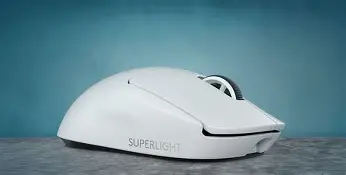
Still, lower weight is not automatically better for everyone. Some users prefer the planted feeling of a slightly heavier mouse because it adds perceived control in general browsing or slower-paced games. The G Pro X Superlight 2 favors agility over anchored stability. Buyers should be honest about whether they actually want that style of handling.
Sensor Performance and Click Feel
Logitech positions the G Pro X Superlight 2 as a high-end performance mouse, and sensor quality is central to that claim. In practical terms, the mouse delivers the kind of tracking buyers expect at this price: accurate, fast, and stable. For most users, the sensor does not call attention to itself, and that is a compliment. Good sensor performance is often defined by what does not happen: no obvious spin-outs, no erratic behavior, no unexplained jitter in normal use.
Shop the latest Electronics picks on Amazon.
Browse Now →For competitive players, the more meaningful result is confidence. The mouse feels dependable in flicks, stable in tracking, and precise in micro-movements. That reliability matters more than any raw specification number printed on a box.
Click feel is another area buyers care about because it affects every interaction. The main buttons on the G Pro X Superlight 2 feel crisp and responsive. They are tuned for speed and consistency rather than exaggerated tactility. In shooters, that supports quick firing and repeat taps. In MOBAs or RTS titles, it supports high-frequency clicking without becoming overly fatiguing. For office and mixed-use work, the click feel is premium enough, though not especially quiet.
The side buttons are functional and useful, but they are not the main attraction. They work well for push-to-talk, melee, utility binds, or browser navigation, but users who prioritize side-button size and abundance may prefer a different style of mouse entirely.
Wireless Performance and Battery Life
Wireless performance is now a deciding factor in this category because buyers no longer accept tradeoffs between convenience and responsiveness. The G Pro X Superlight 2 performs like a serious gaming peripheral should. Connection stability is strong, latency is effectively a non-issue in actual play, and the mouse feels as dependable as a wired option in normal high-level use.
For buyers who still hesitate around wireless charging routines, battery life is a meaningful part of the ownership experience. A lightweight wireless mouse must not create maintenance anxiety. In real-world use, the G Pro X Superlight 2 tends to feel low-maintenance rather than demanding. That is important because users do not want to think about battery management in the middle of competitive play or a busy workday.
Charging convenience, however, still depends on the user’s setup. Those who prefer a mouse they can ignore for very long stretches may want to pay close attention to their charging habits. Competitive wireless devices have improved dramatically, but battery life remains part of the ownership equation, especially for users who forget to top up peripherals.
Gaming Performance Across Different Use Cases
The most obvious fit for the G Pro X Superlight 2 is competitive FPS gaming. Titles that reward quick fli…In tactical shooters, the mouse supports deliberate aim and rapid correction. In fast movement shooters, it stays agile when changing direction quickly. In tracking-heavy games, its lightweight build reduces the effort required for maintaining contact with fast-moving targets.
Outside FPS titles, performance remains strong but the value proposition changes slightly. In MOBAs and RTS games, the mouse feels fast and comfortable, but some players may miss extra programmable buttons. In MMORPGs, the minimalist button layout is clearly not designed for heavy macro usage. In general productivity, video editing, and everyday work, the lightweight design is pleasant, but the mouse is still a performance-first tool rather than a workflow-first one.
This distinction matters for buyers. A great gaming mouse is not automatically the best all-purpose mouse. The G Pro X Superlight 2 shines when speed, comfort, and precision are the priorities.
How It Compares to Other Premium Gaming Mouse Options
The G Pro X Superlight 2 exists in a segment where buyers often compare three things: weight, shape, and trust in the wireless system. Logitech’s advantage is not simply one category-winning spec. It is the combination of brand familiarity, a shape that works for many users, and performance that rarely surprises in a bad way.
Compared to more aggressively ergonomic mice, it is less specialized and more universally usable. Compared to feature-rich gaming mice, it is more focused but less versatile. Compared to some ultralight competitors, it leans on polish and consistency rather than novelty. That makes it a safe premium pick, though not necessarily the most adventurous one.
| Category | G Pro X Superlight 2 | What It Means for Buyers |
|---|---|---|
| Shape | Symmetrical, minimalist, broadly accessible | Works well for many grip styles, but may feel too generic for users who want aggressive ergonomics |
| Weight | Very light | Excellent for fast aim adjustments and long sessions, though some users may prefer more heft |
| Buttons | Minimal set | Ideal for FPS and simple control schemes, less ideal for MMO or macro-heavy use |
| Wireless Performance | High-end and reliable | Suitable for serious gaming without the old compromises associated with wireless peripherals |
| Comfort | Neutral and versatile | Easy to adapt to for many users, but not custom-tailored to one hand posture |
| Value | Premium-priced | Best suited to buyers who will actually appreciate lightweight competitive performance |
Pros and Cons
Pros
- Extremely lightweight design that makes fast aiming and long sessions feel easier on the hand and wrist
- Safe, versatile shape that suits a wide variety of users and does not require a long adaptation period for most people
- Excellent sensor and wireless performance that feels reliable in competitive play
- Solid build quality despite the low weight, helping it feel like a true premium product
- Focused feature set that prioritizes core performance rather than gimmicks
- Strong battery experience for everyday gaming and mixed-use scenarios
Cons
- Premium pricing puts it firmly in enthusiast territory rather than value territory
- Minimal button layout limits its appeal for MMO, productivity macro, or heavy shortcut users
- Neutral shape may feel too safe for buyers who prefer more pronounced ergonomic support
- Very low weight can take adjustment for users coming from heavier mice
- Incremental rather than revolutionary upgrade for owners of recent high-end lightweight mice
What Buyers Typically Care About Before Choosing This Mouse
Premium gaming mouse buyers tend to focus on a handful of practical concerns, and the G Pro X Superlight 2 addresses some better than others.
Comfort over time is usually near the top of the list. Because this mouse uses a safe symmetrical shell and keeps weight very low, it performs well for extended sessions. That matters not only for esports players but also for hybrid users who work all day at the same desk setup.
Find top-rated Electronics products at great prices.
Shop Amazon →Performance consistency is another key concern. Buyers want a mouse that behaves predictably every day, not one that feels impressive for a week and irritating after a month. Here, the G Pro X Superlight 2 does well. It feels stable, mature, and polished.
Upgrade value is where things become more nuanced. If the buyer is moving from a mid-range wireless mouse, an older wired design, or a heavier productivity mouse, the jump can feel substantial. If the buyer already owns a top-tier lightweight model from the last generation, the gains may feel subtle.
Versatility is another consideration. Buyers looking for one mouse to handle competitive shooters, office work, content creation, and macro-heavy games may find the minimalist approach somewhat limiting. The G Pro X Superlight 2 does many things well, but it is optimized around precision-first gaming use.
Buying Guide: Who Should Buy the G Pro X Superlight 2?
The G Pro X Superlight 2 makes the most sense for a specific type of buyer. It is a strong choice for:
- Players who primarily play FPS or other precision-focused competitive games
- Users who want a very light wireless mouse that reduces fatigue over long sessions
- Buyers who value a safe shape with broad appeal over bold ergonomic experimentation
- Those upgrading from older or heavier gaming mice and looking for a cleaner, faster feel
- Users who prefer performance-first design instead of extra buttons and visual flair
It may be a less compelling buy for:
- MMO players or productivity users who need many programmable side buttons
- Shoppers on a tighter budget who can find strong value in older flagship mice
- Users who strongly prefer a deep ergonomic right-handed shape
- Owners of recent premium ultralight mice who are expecting a dramatic leap rather than a refined evolution
Questions Buyers Should Ask Before Purchasing
What games are played most often? If the answer is tactical shooters, battle royale titles, or fast competitive games, the mouse fits naturally. If the answer is MMOs or workflow-heavy office tasks, priorities may differ.
What grip style is used? The shape is versatile, but grip preference still matters. Neutral designs can feel fantastic for some users and merely acceptable for others.
Is weight actually a top priority? Lightweight mice are popular for good reason, but they are not universally preferred. Buyers should think about whether they want speed and effortless glide or a bit more physical steadiness.
Is the current mouse a real problem? For some buyers, the best upgrade is the one that solves fatigue, tracking inconsistency, or comfort issues. For others, chasing small improvements may not justify the premium cost.
So, What Happened After the Switch?
After switching to the G Pro X Superlight 2, the biggest outcome is not that every game suddenly becomes easier. It is that the mouse removes friction from the experience. Movements feel lighter, aiming feels cleaner, and long sessions become less tiring. The hardware fades into the background, which is exactly what a strong competitive mouse should do.
There are no dramatic gimmicks here, and that is part of the appeal. The G Pro X Superlight 2 succeeds by refining fundamentals: shape, weight, responsiveness, and reliability. For the right buyer, especially one focused on shooters or fast-paced gaming, those refinements add up in a meaningful way.
The tradeoffs remain real. It is expensive, minimalist, and not designed to satisfy every type of user. But for buyers who care most about lightweight control, dependable wireless performance, and an all-business design philosophy, the switch is easy to understand. The G Pro X Superlight 2 does not try to impress with excess. It impresses by getting out of the way and letting performance take over.