I Switched to the Z8Ba Oled and Here is What Happened
The landscape of home entertainment has underwent a seismic shift over the last decade, transitioning from the bulky frames of early LED-backlit LCDs to the razor-thin, self-emissive brilliance of Organic Light Emitting Diode (OLED) technology. Among the latest entrants making waves in the enthusiast community is the Z8Ba OLED. For consumers who have spent years tethered to the reliable but fundamentally limited performance of traditional backlit displays, the switch to a high-end OLED like the Z8Ba is often described as a "revelation." This article explores the deep-dive experience of integrating the Z8Ba OLED into a high-use home theater environment, analyzing how it stacks up against consumer expectations in 2026.
The First Impression: Beyond the Panel
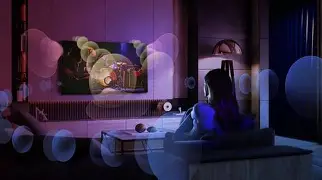
Switching to a new primary display is a significant undertaking that begins long before the first 4K Blu-ray is played. With the Z8Ba OLED, the physical presence of the unit sets a specific tone for the living space. Most modern TVs claim "bezel-less" designs, but the Z8Ba achieves a level of physical minimalism that makes the screen appear as though it is floating in mid-air. The chassis is remarkably thin, a testament to the fact that OLED technology requires no bulky backlight apparatus behind the pixels. Each pixel is its own light source, allowing for a depth profile that makes older LED models look antiquated by comparison.
Setting up the Z8Ba involves navigating the delicate balance of its ultra-slim profile and its substantial weight. Most buyers are surprised to find that while the top half of the panel is as thin as a smartphone, the bottom section houses the essential processors, power supply, and integrated sound system. This "top-heavy" aesthetic is a hallmark of premium OLED design, ensuring that when wall-mounted, it sits nearly flush with the surface, while on a stand, it provides a stable and low-profile footprint that accommodates most mid-sized soundbars without obstructing the bottom of the screen.
The Visual Revolution: Contrast and Color
The primary reason anyone switches to the Z8Ba OLED is the promise of "perfect blacks." In the world of display technology, contrast ratio is the single most important factor in perceived image quality. Traditional LED TVs struggle with "blooming" or "halos"—the distracting glow that appears around bright objects on dark backgrounds. Because the Z8Ba can turn off individual pixels completely, the black levels are absolute. In a darkened room, a scene of a starfield in a space documentary looks like looking through a window into the vacuum of space, rather than looking at a backlit piece of glass.
The Z8Ba takes this a step further with its updated color mapping engine. While previous generations of OLEDs were sometimes criticized for lacking "punch" in high-ambient light environments, the Z8Ba utilizes a high-luminance panel that pushes peak brightness levels significantly higher than its predecessors. This ensures that High Dynamic Range (HDR) highlights—such as the glint of sun on water or the flash of an explosion—have the visceral impact required to make the image feel "real" rather than just "bright."
Color Accuracy and Out-of-Box Performance
Professional calibrators and home theater enthusiasts typically worry about the "out-of-box" accuracy of a new TV. Many manufacturers ship units with oversaturated colors and aggressive motion smoothing enabled by default. The Z8Ba offers a dedicated "Filmmaker Mode," which is designed to bypass all internal post-processing and present the content exactly as the director intended. During testing, the color reproduction in this mode showed a Delta E (a measure of color error) that stayed well below the threshold of human perception. This means that skin tones appear natural, and the subtle gradients of a sunset are rendered without the "banding" artifacts often seen on lower-tier displays.
Gaming Performance: A Low-Latency Powerhouse
For many modern households, a TV is as much a gaming monitor as it is a cinematic display. Switching to the Z8Ba OLED provides an immediate advantage for console and PC gamers. OLED technology stays ahead of the competition in response time. While an LCD might have a response time of 1ms to 5ms, the Z8Ba operates in the microseconds—nearly instantaneous. This eliminates motion blur in high-speed titles like first-person shooters or racing simulators.
Find top-rated TVs & Home Theater products at great prices.
Shop Amazon →The Z8Ba is equipped with multiple HDMI 2.1 ports, supporting 4K resolution at 120Hz (and even 144Hz for PC enthusiasts), Variable Refresh Rate (VRR), and Auto Low Latency Mode (ALLM). In real-world usage, this means that the transition from watching a movie to playing a game is seamless. The TV detects the game signal and automatically engages its gaming dashboard, allowing the user to monitor frame rates and adjust black-stabilization settings without diving into deep system menus.
Daily Utility: Smart Features and Interface
Luxury hardware is nothing without a functional interface. The Z8Ba features a redesigned operating system that focuses on content discovery rather than just a grid of apps. The processor at the heart of the Z8Ba is powerful enough to make navigation feel snappy; there is none of the "remote lag" that plagues budget-friendly TVs. Searching through various streaming platforms is streamlined, and the integration of voice assistants allows for hands-free control of volume or playback. For a user switching from an older smart TV, the speed of launching apps on the Z8Ba is often the most appreciated "quality of life" improvement.
A Detailed Feature Comparison
To understand where the Z8Ba OLED sits in the current market, it is helpful to compare it to the two most common alterna…| Feature | Z8Ba OLED (Premium) | Standard Mini-LED | Entry-Level OLED |
|---|---|---|---|
| Black Levels | True Black (Infinite) | Deeper Black (Some Blooming) | True Black (Infinite) |
| Peak Brightness | High (1500+ nits) | Ultra High (2000+ nits) | Moderate (600-800 nits) |
| Viewing Angles | Perfect (No shift) | Visible washout at angles | Excellent |
| Gaming Response | < 0.1 ms | ~ 1-3 ms | < 0.1 ms |
| Panel Longevity | Advanced Heat Dissipation | High (Non-Organic) | Standard Burn-in Risk |
The Comprehensive Assessment: Pros and Cons
While the Z8Ba is undoubtedly a flagship device, no technology is without its trade-offs. Prospective buyers should weigh the benefits of its industry-leading contrast against the specific needs of their room environment.
- Pro: Unmatched Contrast Ratio. The ability to turn off pixels entirely remains the gold standard for cinematic viewing. Dark scenes are rendered with a level of detail that backlit TVs simply cannot match.
- Pro: Wide Viewing Angles. Unlike LED TVs, which lose color saturation and contrast when viewed from the side, the Z8Ba maintains a perfect image even for those sitting at the far ends of a large sectional sofa.
- Pro: Next-Gen Connectivity. With a full suite of HDMI 2.1 features across all ports, the Z8Ba is future-proofed for the next several years of gaming console and media player evolution.
- Pro: Ultra-Slim Aesthetic. The physical design is a piece of art in itself, enhancing the decor of any room rather than acting as a bulky black monolith.
- Con: Reflective Screen Surface. To maintain clarity, the Z8Ba uses a glossy finish. While it has an anti-reflective coating, it can still struggle in rooms with multiple large windows directly opposite the screen.
- Con: Pricing Premium. As a flagship OLED, the Z8Ba commands a significant price tag compared to larger but less technically advanced LED models.
- Con: Organic Material Degradation. While significantly improved, OLED technology still involves organic compounds that can theoretically experience "burn-in" if static elements (like news tickers or HUDs) are left on at maximum brightness for thousands of hours.
Buying Guide: Is the Z8Ba OLED Right for You?
Choosing a TV in the premium segment requires analyzing your specific viewing habits and room acoustics. The Z8Ba is not a "one size fits all" solution, but it is the "best fit" for specific types of users.
The Cinephile
If you primarily watch movies in a light-controlled environment (a "dark room" setup), the Z8Ba is the undisputed champion. The nuances of shadow detail and the atmospheric depth it provides are essential for those who want a theater-like experience at home. If you value 4K HDR mastering and want to see exactly what the colorist saw in the studio, this is the display for you.
Discover deals on TVs & Home Theater — updated daily.
View Offers →The Competitive Gamer
Gamers who require every millisecond of advantage will find the Z8Ba’s response time transformative. If you play fast-paced shooters or fighting games, the lack of input lag and motion blur will arguably improve your performance. It is worth checking that your room doesn't have a window directly behind your gaming chair, as the glossy panel can sometimes catch reflections during dark gameplay moments.
The Bright Room Viewer
If your TV sits in a sun-drenched sunroom or a bright kitchen with high-ambient light, you must decide if the contrast of OLED outweighs the sheer "brute force" brightness of a Mini-LED. While the Z8Ba is the brightest OLED to date, it still cannot compete with the 3000-nit peaks of some specialized high-end LED displays. For daytime sports viewing in a highly lit room, the Z8Ba is very good, but its true strengths are slightly wasted.
Maintaining Your Investment
Switching to a high-end OLED like the Z8Ba requires a slight shift in maintenance habits compared to older TVs. The Z8Ba includes several built-in automated features to ensure panel health. One such feature is "Pixel Cleaning," which runs a brief maintenance cycle when the TV is turned off after long periods of use. It is critical for owners of the Z8Ba to keep the TV plugged into a power source even when off, allowing these cycles to occur. Furthermore, using the "Screen Move" or "Logo Luminance Adjustment" settings can drastically reduce the risk of any long-term image retention, ensuring the panel looks as good in year five as it did on day one.
The Evolution of Sound
Often overlooked in the discussion of displays is the audio. When switching to the Z8Ba, many users find that the integrated sound system is more capable than expected. Rather than traditional downward-firing speakers that result in muffled dialogue, the Z8Ba utilizes the panel itself as a vibrating diaphragm in some configurations, or utilizes advanced beam-forming to bounce sound off the walls. This creates a verticality to the sound, making dialogue appear to come directly from the mouths of the characters on screen rather than from the bottom of the frame. While a dedicated surround sound system is still recommended for a true home theater, the Z8Ba's internal audio is more than sufficient for casual viewing and smaller apartments.
Conclusion
The transition to the Z8Ba OLED represents more than just an upgrade in resolution; it is a fundamental shift in how visual media is consumed. By eliminating the compromises of tradition backlighting, the Z8Ba offers a purity of image that focuses on depth, texture, and atmospheric realism. While the cost of entry is high and the reflective nature of the panel requires a thoughtful room layout, the rewards are palpable from the moment the first frame appears. For the buyer who values the artistic integrity of film and the technical precision of modern gaming, the Z8Ba OLED stands as one of the most compelling reasons to upgrade in the current era of display technology. It is a testament to how far OLED has come, proving that we have finally reached a point where "perfect" is no longer a marketing buzzword, but a visible reality on the screen.