Kobo Clara Colour Specs, Features, and Value: Is it worth the price tag?
Category: Laptops — E-readers & portable reading devices
Introduction
The Kobo Clara Colour arrived with a clear promise: bring color to the compact e-reader experience without forcing readers back to tablets. For buyers who primarily read illustrated novels, comics, children’s books, or technical manuals with diagrams, a color E Ink device sounds like a compelling middle ground — better than a monochrome e-reader, yet far kinder on the eyes and battery than a backlit tablet. This article examines the Clara Colour’s specifications and features, evaluates real-world performance, compares it to sensible alternatives, and offers practical advice for prospective buyers. The goal is to answer the central question: does the Clara Colour deliver meaningful value at its price point?
At a glance: Key specifications and what they mean
- Display: 6-inch color E Ink panel designed for text and muted color illustrations; includes adjustable front light and blue-light controls.
- Resolution: High-resolution grayscale layer for crisp text; color layer produces softer, lower-resolution color rendering compared to the grayscale text.
- Storage: Sufficient internal storage for thousands of ebooks and hundreds of illustrated titles; suitable for large collections and library loans.
- Connectivity: Wi‑Fi for purchases, library borrowing (OverDrive/Libby integration), and firmware updates; USB-C for charging and file transfer.
- Formats: Native EPUB and PDF support, Kobo store ecosystem compatibility, and common image/document formats for comics and magazines.
- Battery life: Measured in weeks under typical reading conditions thanks to E Ink efficiency; actual duration depends on brightness, wireless usage, and color page refreshes.
- Software: Kobo’s reading software with custom fonts, annotations, dictionary support, and OverDrive integration for public library lending.
Detailed product analysis
Display and color performance
The Clara Colour’s headline feature is its color E Ink display. In practice this is a dual-layer system: a high-contrast monochrome layer that renders text sharply, and a color filter layer that sits on top to deliver muted colors for images and illustrations. This approach preserves reading comfort for long-form text while allowing color where it matters — children’s picture books, simple comics, infographics, and recipe photos.
Color fidelity should be understood in context. Color E Ink is not a replacement for an LCD or OLED tablet when full, vibrant color is required. Instead, it provides a more natural, paper-like palette with reduced saturation and contrast. For line art, panel comics, and diagrams, the Clara Colour performs well enough to make color useful rather than a gimmick. Photographic content looks softer and less punchy, which is acceptable for many reading-centric use cases but may disappoint buyers expecting tablet-level vibrancy.
Reading experience and ergonomics
On a 6-inch screen, the Clara Colour keeps the device compact and pocketable. It’s optimized for single-column reading; dense PDFs and large-format magazines still feel cramped on this size, while EPUB novels and fixed-layout children’s books are comfortable. The front light and color temperature controls allow personalized reading at night and during daytime. Page turns and basic navigation are smooth, though color page refreshes can sometimes be slightly slower than monochrome turns, especially with richly illustrated files.
Kobo’s reading software remains a strength. Native EPUB support and robust typographic controls — including adjustable margins, line spacing, and a variety of fonts — give readers more flexibility than many competitor ecosystems that limit formats. Additionally, built-in OverDrive (library borrowing) and local file management mean readers can rely on public library services and sideloaded content without format conversion or reliance on a closed storefront.
Performance, storage, and battery
Under the hood, the Clara Colour balances hardware that prioritizes battery life and screen quality over raw speed. For everyday use, navigation and opening books are snappy; heavy PDFs or comics with many full-color assets may require slightly longer load times. Storage is large enough for substantial personal libraries and multiple graphic-heavy titles; the device is designed so a reader rarely needs to micromanage files.
Battery life remains a key selling point. Since E Ink only uses power when refreshing the screen, weeks-long battery life is achievable with judicious brightness and occasional wireless syncing. Intensive color image reading and frequent Wi‑Fi use will shorten that span, but the device still far outlasts traditional tablets in typical reading scenarios.
Find top-rated Laptops & Computers products at great prices.
View Offers →Software ecosystem and format support
Kobo’s platform is reader-friendly. EPUB support is native, so this device is a straightforward pick for buyers who rely on public libraries or independent ebook stores. The Clara Colour supports note-taking, highlights, dictionary lookups, and customizable reading settings. It also supports sideloading of PDFs, CBZ/CBR comic archives, and common image formats, which makes it versatile for comic readers and students reviewing lecture slides or manuals.
One practical advantage: the Clara Colour avoids the walled garden some competitors are known for, allowing users to purchase or borrow content from different sources and keep local backups. For many buyers, that openness alone is a major value factor.
Build quality and design
The device uses a matte, slightly textured finish that improves grip and resists fingerprints. Its lightweight construction ma…Real-world use cases
- Parents and children: The Clara Colour is ideal for picture books and early-reader titles where color adds to comprehension and engagement without the distraction of a tablet.
- Comic and manga readers: Readers of color comics, indie graphic novels, and some webcomics benefit from color rendering for art appreciation; however, black-and-white manga may not need the color capability.
- Students and professionals: Those who consult illustrated textbooks, diagrams, or technical manuals can review colored diagrams comfortably during commutes or study sessions, though complex PDFs may be easier to read on a larger screen.
- Casual readers: Novel readers who occasionally pick up illustrated titles get the best of both worlds: crisp text and the option of color where useful.
Pros & Cons
Pros
- High-quality grayscale text rendering with added color capability for illustrations.
- Compact, pocketable 6-inch form factor that suits single-hand reading.
- Native EPUB and OverDrive library integration — flexible content sourcing.
- Long battery life compared to tablets; quiet, low-power reading experience.
- Open file support and sideloading for comics, PDFs, and local content.
- USB-C charging and modern connectivity for convenience.
Cons
- Color E Ink is muted compared with tablets; photos lack vibrancy and contrast.
- Limited benefit for readers who primarily consume text-only novels.
- 6-inch screen can feel small for PDFs, magazines, and dense comics.
- Color page refreshes and heavy illustrated files can be slightly slower.
How the Clara Colour stacks up: comparison table
| Model | Display (type & size) | Text Resolution | Color | Storage | Library Support | Best for |
|---|---|---|---|---|---|---|
| Kobo Clara Colour | 6" color E Ink (dual-layer) | High-resolution grayscale layer (crisp text) | Muted color via filter layer (illustrations, comics) | Generous internal storage for ebooks and comics | Native OverDrive/EPUB support | Readers wanting compact e-ink with occasional color |
| Kobo Clara HD | 6" monochrome E Ink | High (sharp text) | No | Moderate — ideal for books | Native OverDrive/EPUB support | Traditional ebook readers focused on novels |
| Tablet (e.g., small tablet) | IPS/OLED 7–8"+ | High for text on screen | Full, vibrant color | Large, depends on model | Apps for all stores & services | Readers wanting multimedia, apps, and vivid color |
Buyer’s guide: who should consider the Clara Colour?
Deciding whether the Clara Colour is worth the price tag depends on the buyer’s content habits and priorities. Below are practical criteria and scenarios to help with that decision.
1. Content mix — what do you read most?
If the majority of reading time is spent on novels, literary fiction, or long-form nonfiction, a monochrome e-reader still offers the best balance of price and battery life. The Clara Colour makes most sense for readers who frequently consume a mixed diet: novels plus illustrated children's books, comics, cookbooks, or technical guides with diagrams. In those cases, the color capability elevates content comprehension without forcing a switch to a full tablet.
2. Screen size matters
The Clara Colour’s 6-inch size is purposefully compact. Buyers who regularly read PDFs, magazines, or scanned textbooks should consider larger e-readers or tablets for better page layout and fewer zoom/pan interactions. For casual comics and children’s picture books the 6-inch form factor is often sufficient.
3. Library use and file formats
Those who borrow from public libraries or rely on EPUBs will appreciate Kobo’s ecosystem. If library integration and broad format support are priorities, the Clara Colour is a strong choice. Buyers heavily invested in a different ecosystem or with DRM-locked formats should verify compatibility before buying.
Looking for the best Laptops & Computers deals on Amazon?
Browse Now →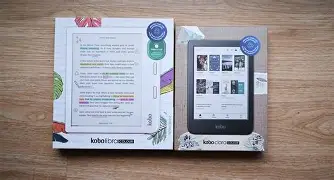
4. Battery and portability
Portability and battery longevity are among the Clara Colour’s strongest selling points. If uninterrupted multi-day reading away from chargers is a priority, e-ink devices like this one outperform tablets by a wide margin.
5. Budget and alternatives
Compare the Clara Colour’s price to monochrome e-readers and mid-size tablets. If color is a rare treat rather than a regular need, saving for a mid-tier monochrome e-reader and using a tablet occasionally may be more cost-effective. Conversely, if color is a frequent requirement but a tablet is too heavy on battery, the Clara Colour hits a unique sweet spot.
Practical buying checklist
- Confirm format compatibility (EPUB/CBZ/CBR/PDF) for your library and purchased content.
- Consider screen size vs. primary content type: 6" for prose and small comics; larger for magazines/PDFs.
- Check storage amounts if planning to keep large comic collections locally.
- Factor in waterproofing and physical controls if reading in bath or poolside environments is important.
- Evaluate battery expectations based on how frequently color pages will be viewed and whether Wi‑Fi will remain on.
Conclusion
For its intended audience, the Kobo Clara Colour is a thoughtful and pragmatic device. It does not try to outshine tablets on color fidelity or multimedia features; instead, it extends the virtues of e-ink reading — comfort, battery life, and focused distraction-free experience — into a realm where color genuinely adds value. Parents, casual comic readers, and those who occasionally consult illustrated documents will find it particularly useful.
At the same time, prospective buyers should calibrate expectations: color E Ink is softer and less saturated than tablet displays, and the small 6-inch canvas limits the comfort of large-format files. If full photographic color, apps, or larger page layouts are primary needs, a tablet or larger e-reader will be a better fit.
Ultimately, whether the Clara Colour is worth the price tag depends on how often color matters in a reader’s library and whether the trade-offs of muted color and smaller size are acceptable in exchange for the familiar benefits of an e-ink device. For many readers who want occasional color without sacrificing battery life and comfort, the Clara Colour represents a compelling compromise.