Should You Upgrade from Sigma 12Mm F 1 4 Dc C to Wandrd Prvke V4?
At first glance, the question “should you upgrade from a Sigma 12mm f/1.4 DC C to a Wandrd PRVKE V4?” sounds like comparing apples and backpacks. One is an ultra‑wide prime lens designed to change what can be captured optically; the other is a camera backpack designed to change how photographers carry and protect gear. Yet photographers often face exactly this kind of trade‑off: reinvest limited budget into better optics or into a smarter carry system that enables different shooting workflows. This article unpacks that decision. It looks at real‑world use cases, buyer priorities, and the practical effects each item has on image making and the shooting experience.
Why the comparison matters
Photographers on a budget or those reorganizing a kit commonly ask whether to prioritize the next lens or a better bag. Lenses directly impact image quality and creative possibilities. Bags influence comfort, speed of access, safety of equipment, and how much one is willing to carry into demanding environments. Understanding what each product does—and what it won't do—helps align purchase decisions with the photographer’s goals.
Product analysis: Sigma 12mm f/1.4 DC C
The Sigma 12mm f/1.4 (DC designation indicates it’s built for APS‑C sensors) occupies a particular niche: an ultra‑wide prime with an exceptionally large aperture for its focal length. For photographers who shoot landscapes, architecture, interiors, and especially night skies, an ultra‑wide fast prime opens creative possibilities that zooms and slower lenses struggle to match.
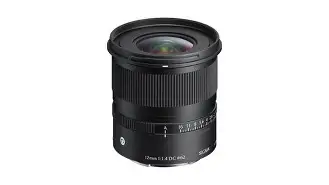
Real‑world strengths of this lens include the ability to capture expansive scenes while holding relatively fast shutter speeds at wide apertures—useful for handheld low‑light shots and for minimizing trailing in astrophotography with shorter exposures. The wide field of view also enables exaggerated perspectives and close foreground emphasis that many landscape and environmental portrait shooters prize.
Buyers typically care about optical quality (sharpness, contrast, control of coma and astigmatism for stars), size and weight, autofocus performance, filter compatibility (if any, since ultra‑wides often use built‑in petal hoods or front elements that complicate filters), and whether the lens’s character suits their camera system. For astrophotographers, coma correction and corner sharpness at f/1.4–f/2.8 matter more than autofocus speed; for travel shooters, minimizing weight without sacrificing field of view matters most.
Who benefits most from the Sigma 12mm
- Astrophotographers and nightscape shooters who need a very wide field with a large aperture to capture stars and the Milky Way.
- Landscape photographers who compose with dramatic foregrounds and need strong depth of field control at wide angles.
- Real‑estate and architecture photographers needing expansive interiors or exteriors without leaning on stitching.
- Photographers shooting on APS‑C bodies who want an ultra‑wide prime rather than a bulky full‑frame equivalent.
Product analysis: Wandrd PRVKE V4
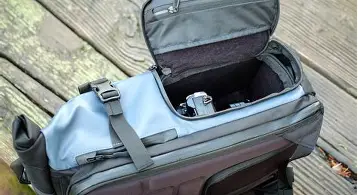
The Wandrd PRVKE V4 is a camera backpack from a brand known for blending street‑style aesthetics with practical camera organization. It’s not a lens or a piece of glass; it’s a system that changes how reliably, comfortably, and quickly a photographer can bring their gear into the field. Practical benefits often cited by users are fast side access, configurable interiors, weather resistance, and a modern silhouette that works for travel and everyday carry alike.
Find top-rated Cameras & Photography products at great prices.
See Deals →In practice, a well‑designed bag like the PRVKE V4 can increase shooting time by making it faster to change lenses, stabilize a tripod, or pull out filters. It can reduce fatigue on long walks, protect gear from rain or knocks, and act as a mobile workstation with laptop and accessory storage. For many photographers the bag is the difference between bringing the full kit or leaving a critical element (like the Sigma 12mm) at home.
Buyers typically care about capacity and organization, comfort and fit for the wearer, access patterns (top vs side), build materials and weather resistance, durability, and airport/airline carry compatibility. For travel photographers, the bag’s ability to carry a tripod, drone, laptop, and camera kit in a single pack is a deciding factor.
Who benefits most from the Wandrd PRVKE V4
- Travel and documentary photographers who need protected, organized gear and fast access in crowded …
Scenario 2: A landscape / astrophotographer seeking better low‑light performance and subject reach
If the primary aim is to push image quality and capture stars or dramatic low‑light landscapes, the lens is the better direct investment. The Sigma’s large aperture and ultra‑wide field meaningfully change what can be recorded in single exposures—something a bag cannot do.
Scenario 3: A professional who travels with drone, camera, laptop, and multiple lenses
For a working kit where keeping equipment organized and protected during transit saves time and reduces risk, the bag becomes indispensable. The PRVKE V4 permits a single pack solution and faster transitions between shooting modes, which can pay off in time saved and lower stress.
Looking for the best Cameras & Photography deals on Amazon?
Shop Amazon →Scenario 4: A hobbyist building a kit on a budget
If image quality and new creative possibilities are the primary motivators, new glass typically has a more direct impact on photographs. If the hobbyist already struggles to bring gear into the field at all, the bag may effectively unlock the value of the current kit.
Buying guide: how to decide between lens or bag
Use this checklist to align the decision with real needs rather than impulse.
1. Define the problem
- Is the current limitation optical (images not sharp, not wide enough, poor low‑light capability) or logistical (gear is heavy, disorganized, gets damaged, or is left at home)?
- If the limitation is optical, lean toward the lens. If it’s logistics or comfort, lean toward the bag.
2. Consider frequency and context of use
- How often will each product be used? A lens that sits in a drawer wastes money faster than a durable bag used daily.
- If the photographer shoots landscapes or nightscapes weekly, a specialized lens is high leverage.
- If travel, street, or event work is frequent, a better bag can increase productivity and reduce fatigue.
3. Assess the financial and long‑term value
- Lenses often retain resale value well and directly improve creative capability.
- Bags are consumable over time but can be used with many systems and often last years if well made.
- Consider trade‑off: selling one good lens may fund a bag and still leave a solid optical foundation, but the reverse is also true.
4. Match to the existing kit
- Ensure the Sigma is compatible with the camera body and that its strengths are relevant (e.g., APS‑C users benefit differently than full‑frame users).
- Measure the bag against the actual gear one owns: slot sizes, tripod straps, laptop sleeve dimensions, and how many lenses/bodies it must carry.
5. Try before buying when possible
- Rent the lens for a weekend of shooting to feel its optical impact and handling.
- Try the bag loaded with your actual kit in a store or borrow one for a day hike to judge comfort and access.
6. Practical checklist before purchase
- For the lens: check reviews for sharpness across aperture and focus distances, coma performance for stars, autofocus behavior, and whether front filters are supported.
- For the bag: confirm weather resistance, warranty/support, divider configuration, carry comfort with actual weight, and access pattern for how that photographer shoots.
Final considerations
Ultimately the decision is not strictly “upgrade” in the sense of one replacing the other. The Sigma 12mm f/1.4 DC C and the Wandrd PRVKE V4 answer different problems. One changes the visual possibilities of the camera; the other changes how, where, and how often a photographer can bring gear. The right choice depends on the photographer’s primary bottleneck:
- If the bottleneck is creative capability—especially for nightscapes, extreme wide compositions, or low‑light handheld work—the Sigma lens is the impactful buy.
- If the bottleneck is logistics—gear is heavy, disorganized, or rarely brought out of the bag—the PRVKE V4 will likely generate more immediate value by improving workflow and protecting equipment.
Conclusion
Rather than seeing the decision as upgrading from one to the other, photographers should view it as allocating limited resources to the most meaningful constraint in their workflow. If images are limited by optical capability, the Sigma 12mm opens new creative doors. If shoots are missed, gear is cumbersome, or protection and access are constant pain points, the Wandrd PRVKE V4 can be transformative. For many photographers the ideal path is sequential: prioritize the product that removes the immediate bottleneck today, and plan to add the other when the budget allows—because both good glass and a reliable carry system are essential foundations of a practical, creative kit.